By
Matej Cvikl
December 23, 2025
•
2
min read

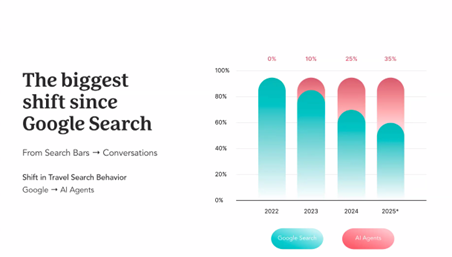
For years, Google dominated the hotel discovery process through keyword-based searches and paid ads. Travelers typed queries like “best beachfront hotel in Miami” and sifted through links, OTAs, and hotel websites. This model is now being disrupted by agentic AI—intelligent systems that don’t just provide information but act on behalf of the user.
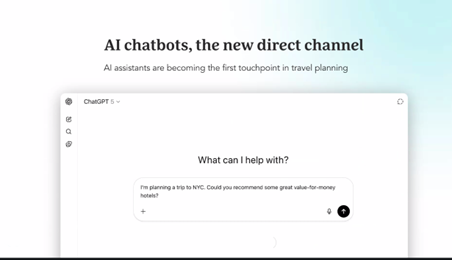
Instead of browsing multiple tabs, travelers increasingly interact with AI assistants such as ChatGPT, Microsoft Copilot, or Google’s own AI Mode, asking conversational questions like:
“Plan a three-night stay in Barcelona at a boutique hotel with a rooftop pool and vegan breakfast options.”
The AI agent then curates options, compares prices, and can even complete the booking—all within a single interface. This shift eliminates friction and accelerates the booking journey. [mckinsey.com], [travelweekly.com]
The implications for hotels are profound:
• Visibility Rules Have Changed: Traditional SEO is losing relevance. AI-driven platforms prioritize structured data, real-time availability, and rich content over keyword rankings. Hotels must embrace AI Engine Optimization (AEO) to remain discoverable.
• Direct Booking Opportunities: AI agents can bypass OTAs, reducing commission costs (15–20%) and enabling hotels to reclaim guest relationships. However, this requires API readiness and seamless booking flows.
• Hyper-Personalization: AI agents leverage behavioral data, loyalty profiles, and contextual preferences to deliver tailored recommendations—something static search results could never achieve.

Google isn’t stepping back—it’s evolving. With Project Mariner and AI Mode, Google plans to integrate agentic booking capabilities directly into its ecosystem, partnering with major hotel brands and OTAs. This means hotels must ensure their Google Business Profiles and structured data are optimized for AI-driven queries.
According to PwC, 68% of travelers expect to use AI for comparing flights and 57% for booking travel this holiday season. This trend signals the rise of agentic commerce, where AI agents handle discovery, recommendation, and transaction in one flow. Hotels that fail to adapt risk disappearing from these AI-generated answers.
To thrive in this new landscape:
• Implement Structured Data & APIs: Ensure your booking engine can feed real-time rates and availability to AI platforms.
• Optimize for Conversational Queries: Move beyond keywords—create content that answers natural language questions.
• Leverage Loyalty Data: AI agents value personalization; integrate loyalty programs into your AI strategy.
• Invest in AI-Powered Guest Communication: From chatbots to dynamic pricing, AI tools can enhance direct bookings and guest satisfaction.
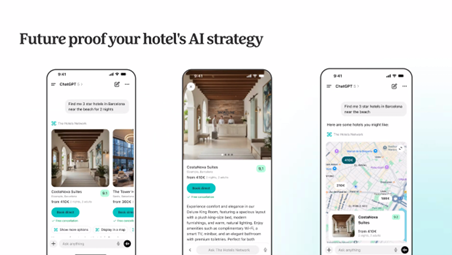
The shift from Google hotel search to AI agent-driven booking isn’t just a technological upgrade—it’s a fundamental change in consumer behavior. The winners will be hotels that embrace data-driven personalization, frictionless booking experiences, and AI-ready infrastructure. Those who cling to old SEO tactics risk invisibility in an AI-first world.
.jpg)
Z našimi rešitvami boste dosegli večjo zadovoljstvo gostov z manj zaposlenimi in nižjimi stroški
.svg)




.png)