By
Amanda McDowell
September 16, 2026
•
9
min read

Running a profitable hotel has never been more complex. Every missed call, slow check-in and inefficient task eats into both margins and revenue opportunities. Labor costs continue to rise and guest expectations keep climbing, while 76% of hotels have faced staffing difficulties, according to recent industry survey data from the American Hotel & Lodging Association (AHLA).
That’s why hotel operational efficiency matters more than ever. Smarter operations cut costs, free up staff time, improve the guest experience and make you more money in the process. In this guide, we’ll break down practical operational strategies that help you save and make money.
Hotel operational efficiency is optimizing resources (e.g. staff time, energy usage and supplies) while streamlining workflows to reduce waste, lower costs and improve overall guest satisfaction. It’s less about cutting costs, and more about using smarter processes and technology to simplify operations across departments like front desk, housekeeping and guest services.
When your hotel is operationally efficient, it looks like:
Before improving operational efficiency, it’s important to understand the core departments that keep a hotel running day to day. Hotel operations typically center around four key functions:
Each department plays a direct role in shaping both operational performance and the guest experience.
When these teams operate efficiently and stay connected, hotels reduce friction, improve service and unlock stronger revenue opportunities. For the specific roles and responsibilities of each department, read our comprehensive guide on Hotel Operations and Management.
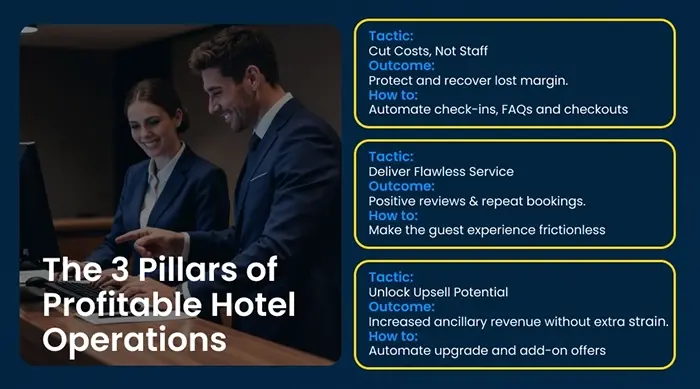
Think of hotel operational efficiency as the trunk of a tree, feeding the branches of revenue and guest satisfaction. When operations need less attention, staff spend more time delivering personalized guest experiences.
Faster service, better communication and fewer operational bottlenecks are all key strategies for increasing revenue, because they all contribute to stronger hotel operations. Improved guest service leads to better reviews and repeat bookings. Higher operational efficiency reduces overhead and offers more room for upsell fulfillment. It’s a win-win-win all around.
Mundane tasks, like answering common guest questions, managing check-ins, sending guest communications and processing routine requests can all be improved through automation. AI-powered solutions work in the background to complete these repetitive tasks, so staff can focus on more high-impact interactions.
This improves the consistency of your hotel’s service, but it also serves to directly benefit staff. Instead of ending the day with the mental fatigue that quickly begets burnout, staff get to create meaningful connections with every guest.
Efficient hotel operations create a better guest experience at every interaction. It’s easier to build guest satisfaction when guests receive quick responses, easy check-ins and personalized service without delays or friction.
That smoother experience has a direct impact on loyalty and revenue. Happy guests are more likely to leave positive reviews, return for future stays and recommend your property to others — all of which strengthen long-term profitability!
Juggling routine requests and manual processes is a drain on resources and on brain space. Instead, empower your teams to spend more time delivering personalized guest service, recommending upgrades and creating the memorable interactions that make a truly great stay.
Automation also creates new opportunities to surface upsells throughout the guest journey, from room upgrades to late checkout and on-property add-ons. More ancillary revenue, more guest personalization and less work for staff means everyone stands to benefit.
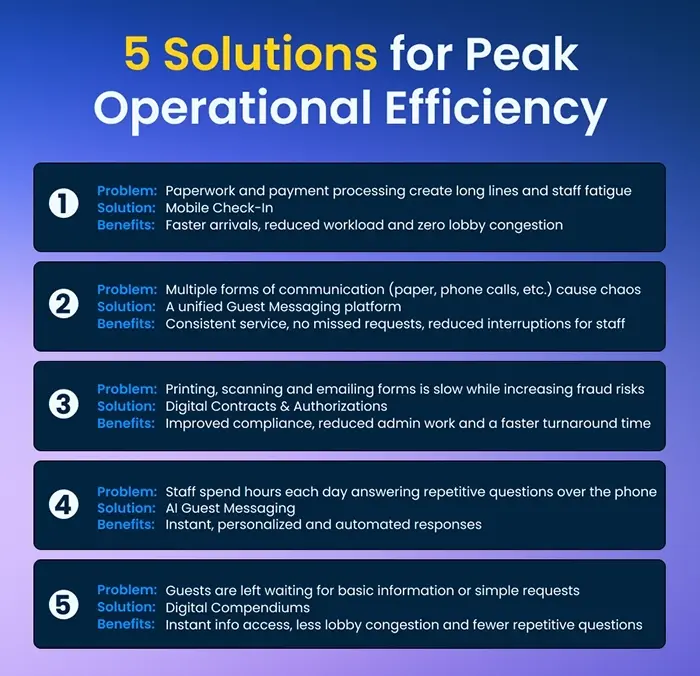
Hotels often focus on cutting costs when they want to improve hotel operations. But the biggest gains come from improving workflows, reducing friction and giving staff more time to focus on guests. Strong hotel operations and management strategies create smoother experiences for both staff and travelers, while unlocking new revenue opportunities in the process Here are some helpful tips.
Manual check-ins and checkouts are some of the biggest bottlenecks to operational efficiency in the hotel industry. Front desk teams spend valuable time handling paperwork, processing payments and answering repetitive questions, all while guests wait in line after a long day of travel.
Automating the arrival and departure experience is one of the fastest ways to reduce this friction. Solutions like Canary’s Mobile Check-In and Smart Checkout streamline the entire workflow by reducing lobby congestion and dramatically cutting staff workload. Hotels that automate arrivals and departures create a better first (and final) impression while automating offers for popular add-ons like early check-in or late checkout.
Fragmented guest communication creates operational chaos. When staff rely on phone calls, paper notes or other disconnected systems to manage requests, it’s inevitable that messages will get lost in the process.
Centralized Guest Messaging solves this by bringing communication into one organized platform. Staff can manage guest conversations across channels while automating routine interactions to improve response times. This gives guests the instant, accurate service they expect, while reducing service misses and staff interruptions.
Manual sales and payment workflows slow down operations and create unnecessary security risks. Printing, scanning, emailing and storing paper authorization forms wastes staff time while increasing the risk of fraud and processing errors.
Digital Contracts and Digital Authorizations modernize these workflows by automating approvals, signatures and payment verification in one secure system. This reduces administrative work while boosting efficiency, and prevents any headaches from compliance issues down the road.
Hotel teams spend a surprising amount of time answering the same questions every day: “What time is check-in? Do you offer parking? Is the pool open? Can I request a late checkout?” These repetitive interactions create constant interruptions for staff, slowing down service and increasing the likelihood of service errors.
Canary’s AI Guest Messaging acts as a digital front desk agent, instantly answering common guest questions 24/7 and escalating more complex issues to staff. This improves response speed, and hotel staff actually have time to focus on the higher-value guest interactions.
Travelers increasingly prefer self-service options so they can get service on their terms. For front desk workers, self-service tools reduce operational strain by minimizing repetitive guest requests. That makes it a win for both guests and hotel teams.
Solutions like Self-Service Kiosks and Digital Compendiums allow guests to check in and access hotel information without waiting for staff assistance. Whether the guest arrives after-hours or at a busy time, they’ll be able to get the instant service they expect.
The most successful hotels see operational efficiency as a growth strategy. Smoother hotel operations result in better staff efficiency and guest service. Plus, revenue opportunities become easier to capture at every stage of the guest journey.
From automating check-in workflows to streamlining guest communication and implementing AI-powered service tools, efficient hotel operations create measurable business impact.
Ready to build a more efficient and profitable hotel? Discover how Canary’s platform streamlines operations to drive revenue.
Operational efficiency is important because it directly impacts both profitability and the guest experience. Efficient hotels reduce wasted time, streamline workflows and lower operational costs while delivering faster, more personalized service. This improves guest satisfaction, increases staff productivity and creates more opportunities for revenue growth through upsells, repeat bookings and stronger online reviews.
Examples of hotel operational efficiency include automating repetitive tasks, streamlining workflows, optimizing inventory management, implementing energy-saving measures, improving employee training and adopting advanced hospitality technology.
Hotels improve operational efficiency by reducing manual work, automating repetitive processes and connecting systems across departments. The most effective strategies often include digitizing the guest journey, centralizing communication, implementing AI-powered tools and offering self-service options for guests.
Strong hotel operations and management strategies focus on creating smoother workflows that improve both staff productivity and guest satisfaction at the same time.
Technology improves hospitality efficiency by automating time-consuming tasks, reducing operational bottlenecks and giving staff faster access to information. Tools like Canary’s Mobile Check-In, Guest Messaging, AI Voice and Smart Checkout reduce manual workload while improving service speed and consistency.
Connected hospitality platforms also improve communication between departments, helping hotels operate more smoothly while delivering better guest experiences.
The speed of ROI often depends on the size of the property, existing workflows and the specific technology being implemented, but operational efficiency improvements typically deliver both short-term savings and long-term revenue growth.
Many hotels begin seeing ROI from operational improvements within a few weeks, especially when implementing automation and guest-facing technology. Faster check-ins, reduced labor strain, improved upsell conversion and fewer missed guest requests create immediate operational and revenue impact.

Z našimi rešitvami boste dosegli večjo zadovoljstvo gostov z manj zaposlenimi in nižjimi stroški
.svg)








_logo.jpg)


.jpg)