By
Maja Hvalica
April 17, 2026
•
6
min read
Across the hospitality industry, recent events, conferences, and expert discussions all point in the same direction: hotels are entering a new phase of digital transformation. The focus is shifting from individual smart solutions toward connected, data‑driven ecosystems that support automation, guest experience, operational efficiency, and future innovation.
This message is clear across the industry and was strongly echoed at one of the world’s most important hospitality technology events, ITB Berlin 2026.
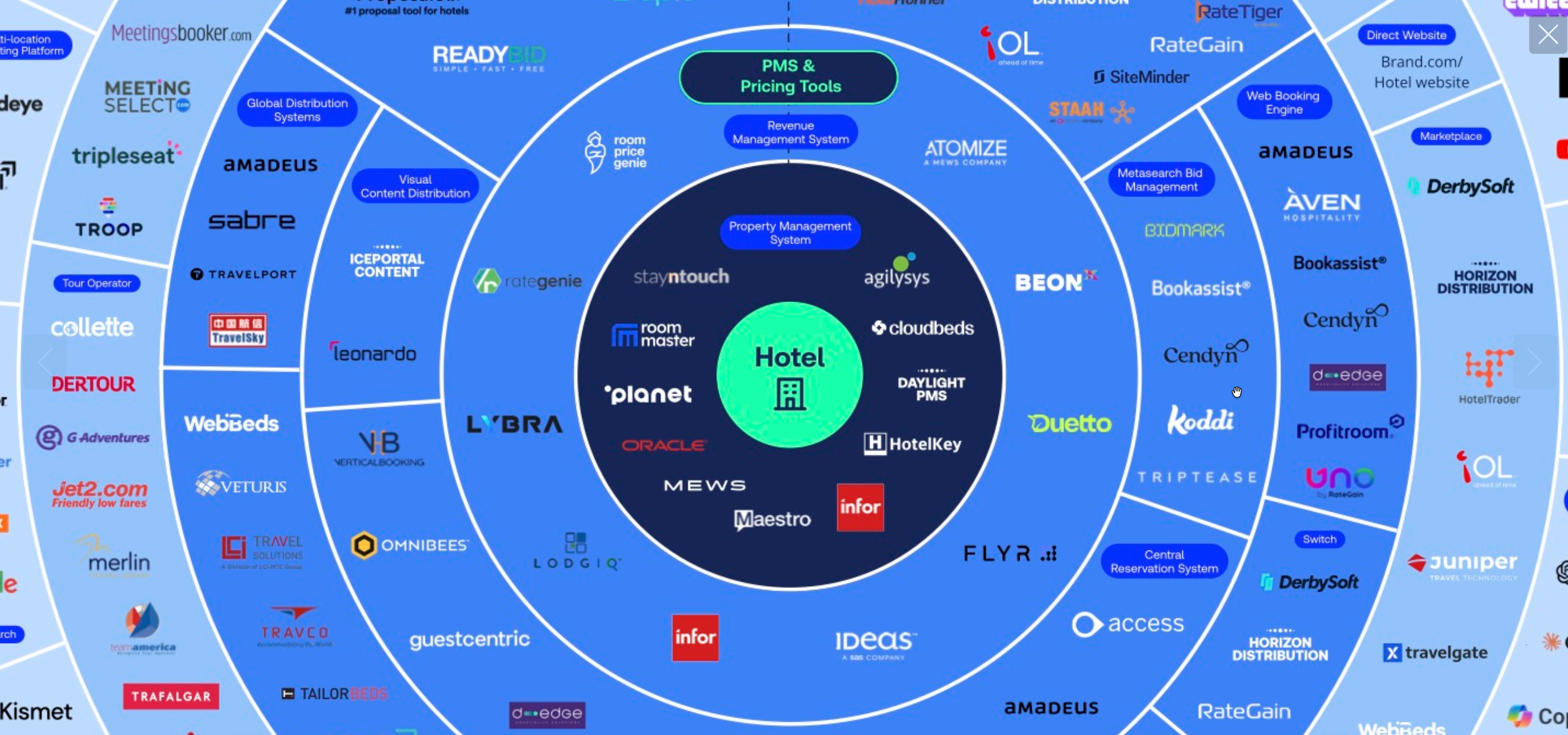
One of the main trends in hospitality today is the move away from isolated, single‑purpose systems toward fully connected ecosystems.
Hotels operate in complex environments where guest rooms, energy systems, EV chargers, building infrastructure, hotel software, and IT platforms all generate valuable data. However, this data becomes truly actionable only when it flows seamlessly across systems.
Across the hospitality industry, a clear consensus has emerged:
• AI cannot compensate for a fragmented infrastructure
• Disconnected systems limit visibility, automation, and long‑term scalability
• Open platforms and seamless integrations are no longer optional; they are essential
For hotels, moving from experimentation to real results starts with a connected digital foundation. Once reliable data flows and integrated systems are in place, advanced automation and AI-driven intelligence can create measurable business value.
This is why IoT, building automation, and open interfaces are now considered foundational technologies. They create the structured, real‑time data environment AI needs to deliver predictive insights, automation, and continuous optimization.
Put simply, AI provides the intelligence, while connected automation acts as the nervous system that brings it to life.
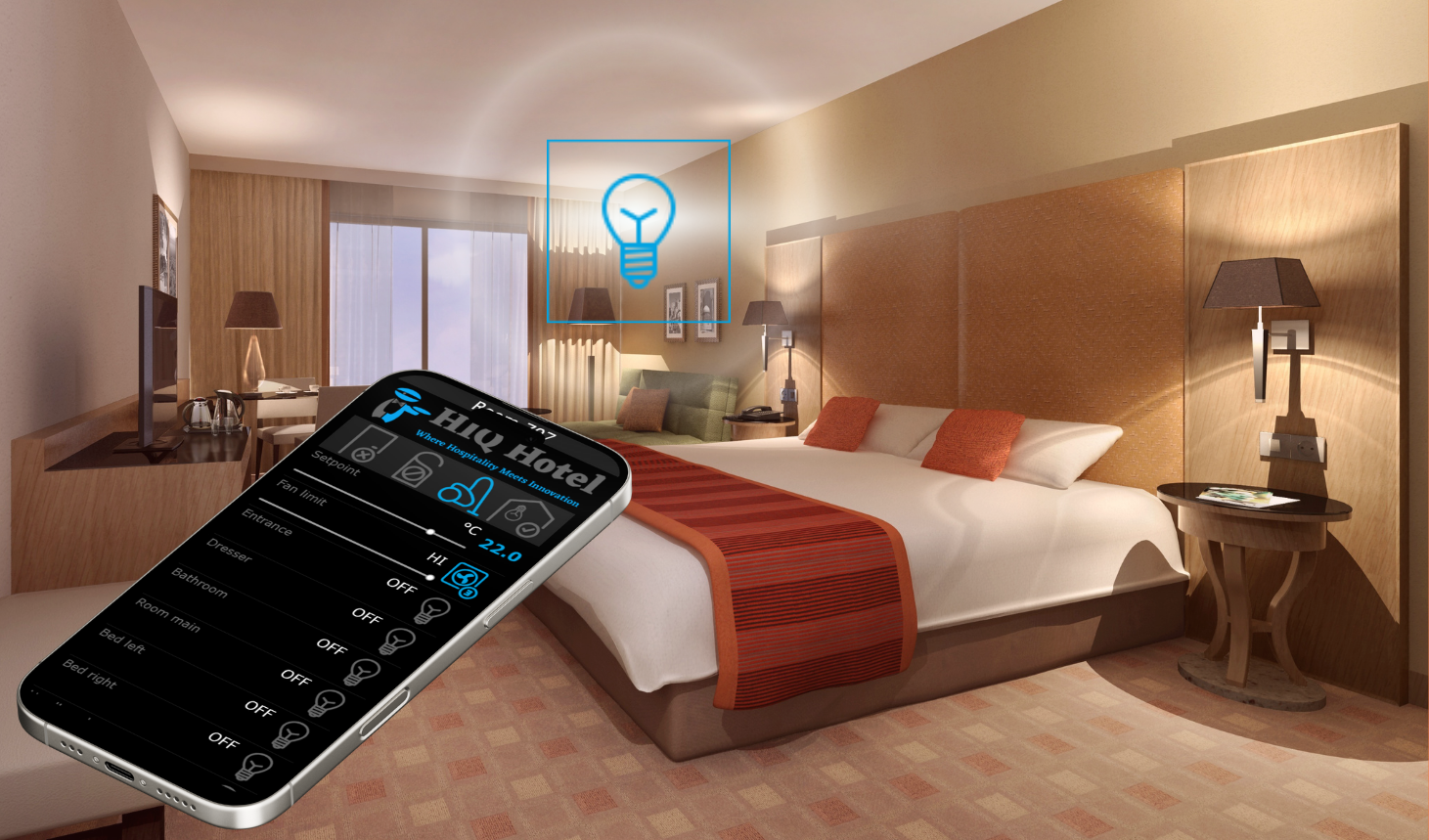
Guest Room Management Systems (GRMS) are at the heart of this transformation. Traditionally, GRMS focused on basic room control: lighting, HVAC, blinds, and card holders. Today, their role has expanded significantly. Modern GRMS solutions act as a real‑time interface between guests, hotel operations, and building systems.
When designed as part of an integrated platform, GRMS enables:
• Occupancy‑based energy optimization (beyond simple card systems)
• Personalized comfort settings without guest effort
• Automatic responses to guest behaviour and room usage
• Seamless coordination with housekeeping, maintenance, and PMS data
This makes GRMS one of the richest data sources in a hotel environment, feeding AI with accurate, contextual, real‑world information. Across the hospitality sector, it has become clear that AI‑driven guest experience does not start with chatbots or mobile apps. It starts with intelligent rooms that form the foundation of everyday hotel operations.
Modern smart rooms are designed to:
• Adapt automatically to guest presence and behaviour
• Reduce friction by working in the background, without guest effort
• Optimize energy use invisibly, balancing comfort and efficiency
• Support hotel staff, streamlining workflows rather than replacing human interaction
This is where GRMS plays a critical role as the point where technology meets the guest quietly, continuously, and effectively, enabling comfort, sustainability, and operational excellence at the same time.
The definition of guest experience is expanding and so is hotel responsibility. Energy efficiency, sustainability, and mobility are now strategic priorities, not side topics.
Hotels are expected to:
• Reduce energy consumption without compromising comfort
• Integrate renewable energy and energy storage
• Offer EV charging as part of a modern guest journey
• Monitor and optimize systems in real time
A key industry trend is integration. Energy management systems, EV chargers, GRMS, and building automation must operate as one coordinated platform, not as isolated tools. When connected:
• Energy usage adapts dynamically to room occupancy and hotel activity
• EV charging can be monitored, optimized, and expanded intelligently
• Operational decisions are driven by live data, not static schedules
• Sustainability goals become measurable and achievable
AI plays an increasing role here, but only because the underlying infrastructure is already connected, standardized, and secure.
This is exactly where Robotina’s approach fits into the emerging hospitality landscape. Rather than offering isolated solutions, Robotina focuses on building open, connected, and future‑ready platforms that allow hotels to evolve at their own pace.
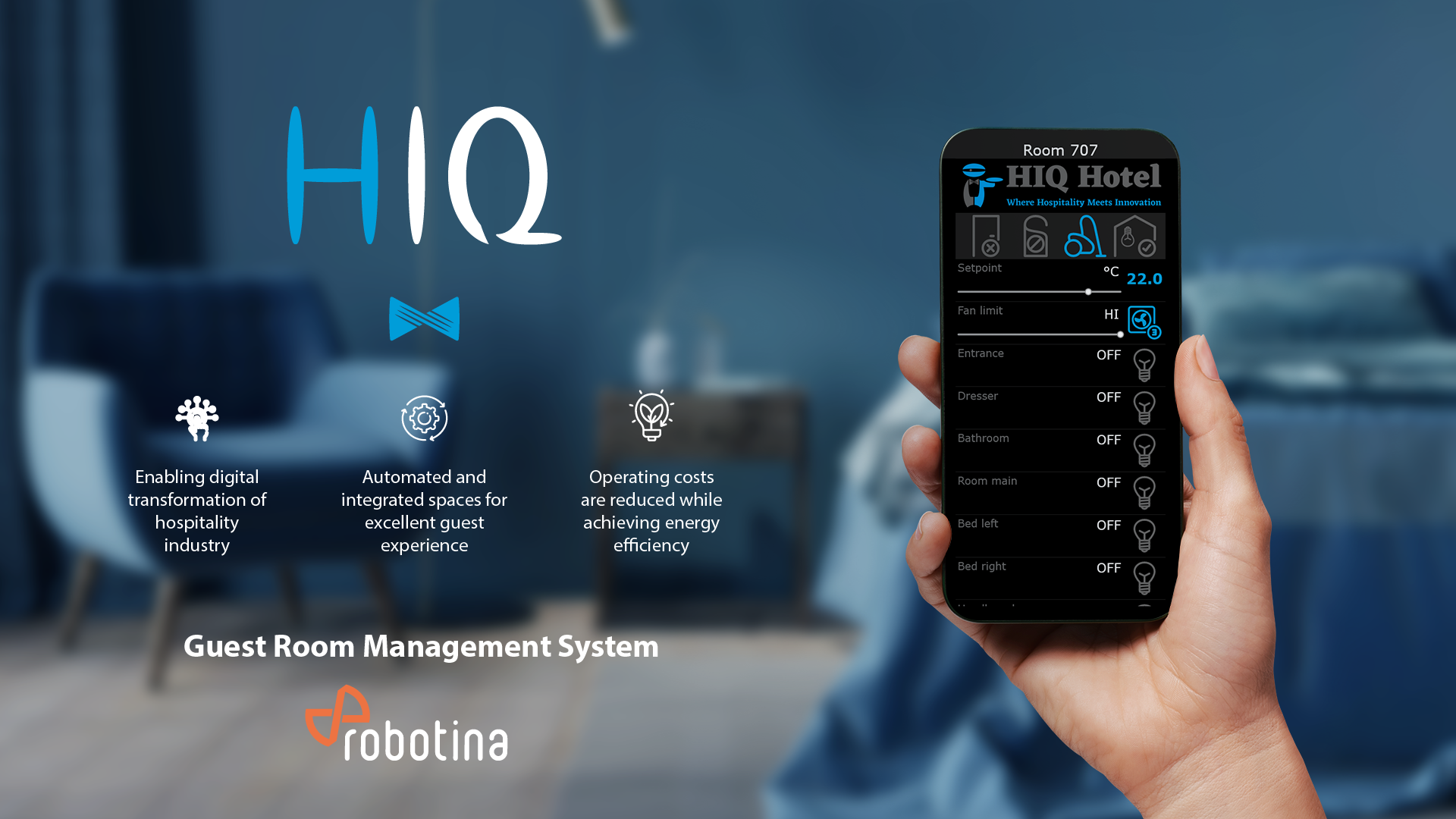
HIQ Hospitality: Intelligent Automation at Room and Building Level
Robotina’s HIQ Hospitality platform delivers advanced GRMS and building automation designed for:
• Seamless guest comfort
• Energy optimization without guest intervention
• Integration with PMS and hotel software
• Open interoperability with new digital services and AI applications
HIQ Hospitality is not just about controlling rooms; it creates the structured operational data that AI systems rely on.
Energy Management and EV Charging as Part of One System
Robotina integrates:
• Energy monitoring and optimization
• Load management and peak shaving
• EV charging infrastructure
into the same digital ecosystem.
This ensures energy decisions are aligned with hotel operations, occupancy, and guest behaviour, rather than handled in isolation.
4Spaces: The Digital Services and Integration Layer
With 4Spaces, Robotina connects automation systems to IT infrastructure, cloud services, hotel software, advanced analytics, and AI solutions.
4Spaces acts as the bridge between physical building systems and digital intelligence, enabling hotels to gradually adopt AI‑driven services without replacing existing infrastructure.
The key takeaway from hospitality events and industry discussions is not that AI is “the future”, but that AI‑ready hospitality is built on integration, openness, and solid foundations.
Robotina’s services are designed with exactly this principle in mind:
• Connected instead of isolated
• Modular instead of rigid
• AI‑ready instead of AI‑dependent
This is not automation for automation’s sake. It is strategic digital transformation for hospitality, where technology works quietly in the background, enabling better guest experiences, more efficient operations, and a sustainable future.

Z našimi rešitvami boste dosegli večjo zadovoljstvo gostov z manj zaposlenimi in nižjimi stroški
.svg)





.jpg)

.jpg.webp)